

Natural vs Artificial Coffee Flavoring Oils: 2026 Guide
Table of Contents
- Natural vs Artificial Coffee Flavoring Oils: The Core Difference
- What Natural Flavoring Oils Are Made From
- What Artificial Flavoring Oils Are Made From
- What Does Natural Flavor Mean on a Coffee Label?
- How Are Flavored Coffee Beans Made?
- How to Flavor Coffee Beans at Home
- Are Flavored Coffee Beans Bad for You?
- Natural vs Artificial: Side-by-Side Comparison
- How to Choose a Flavored Coffee You'll Actually Like
- Frequently Asked Questions
Last Updated: October 19, 2026
Natural vs Artificial Coffee Flavoring Oils: The Core Difference
The difference between natural and artificial coffee flavoring oils comes down to the source of the flavor molecules, not the process used to capture them.
That is the whole distinction. The word "natural" describes origin, not safety, purity, or quality.
A flavor chemist can build the exact same molecule, vanillin, two ways: extract it from vanilla beans, or synthesize it from guaiacol. Your nose cannot tell the difference. Your wallet can, because natural vanillin costs dramatically more to produce.
What Natural Flavoring Oils Are Made From
Natural flavoring oils start with real plant material: vanilla pods, cocoa nibs, citrus peel, mint leaves, cinnamon bark, or fruit.
The U.S. Food and Drug Administration's flavor labeling regulations define "natural flavor" as any substance extracted from a plant, animal, or fermentation source whose primary function is flavor rather than nutrition. That definition is broader than most shoppers assume.
Two things most guides miss. First, "natural" says nothing about how many steps the extraction took. Second, the source material can be a fruit, vegetable, spice, or even a fermentation byproduct.
For coffee specifically, natural flavoring oils are usually diluted into a carrier oil, often a neutral food-grade oil, so they spread evenly across thousands of beans.
What Artificial Flavoring Oils Are Made From
Artificial flavoring oils are built from synthetic compounds, often derived from petroleum or wood pulp byproducts, assembled to mimic a target flavor. A flavorist identifies the key aroma molecules in, say, a strawberry, then recreates that profile using chemically identical compounds.
Here is the part that unsettles people: the molecules are often identical to the natural ones. The Flavor and Extract Manufacturers Association runs a safety review program for these substances, and the FDA oversees their use under federal food additive rules.
Artificial flavors are cheaper, more consistent, and more stable across temperature changes. A synthetic hazelnut reads as "hazelnut" instantly, but it rarely develops or shifts as the cup cools.
What Does Natural Flavor Mean on a Coffee Label?
"Natural flavor" on a coffee label means the flavoring substance was extracted from a plant, animal, or fermentation source, but it does not mean the coffee is organic, unprocessed, or free of additives. It also does not require the label to disclose which plant the flavor came from.
This is the single most misunderstood term in the category. A bag can legally say "natural flavor" when the flavoring is a highly processed extract from a source the label never names. It tells you the origin of the molecules, not the quality of the bean underneath.
What to look for instead:
- "All natural flavoring" plus a named flavor (vanilla, caramel, mint) suggests a straightforward extraction
- A short ingredient list with no added sugar, syrups, or artificial colors
- A roast date, not just a best-by date, since flavor oils fade with age
- A specific bean origin, which signals the roaster cared about the base coffee
How Are Flavored Coffee Beans Made?
Flavored coffee beans are made by roasting green coffee, then applying flavoring oil to the beans while they are still warm so the porous surface absorbs the flavor, before the beans cool and seal. The timing is the entire trick.
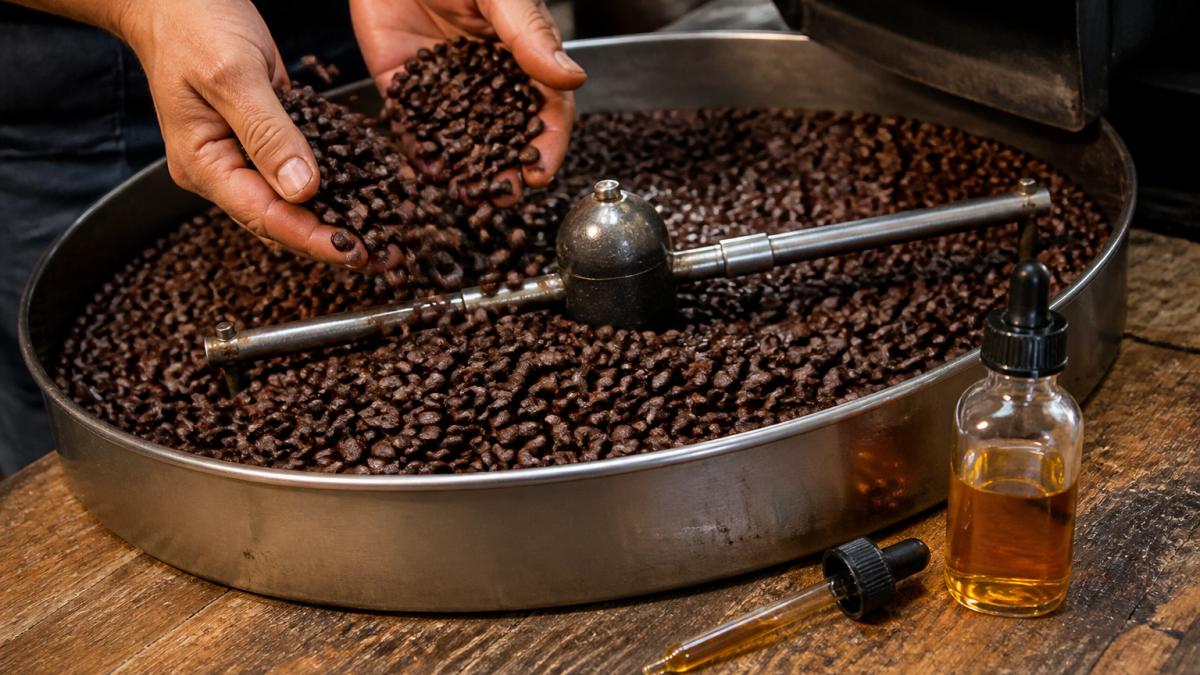
Coating, Infusion, and Why Timing Matters
There are two main methods. Coating sprays flavoring oil onto the bean surface, where it clings to the oils already present. Infusion applies the flavoring while the bean is still hot and off-gassing, so the flavor draws into the outer layers rather than sitting on top.
Warm beans absorb flavoring more evenly. Cold beans reject it, and the oil pools in the bag, leaving you with a greasy first scoop and a bland last one.
Bean freshness and flavor preservation are linked. Flavoring oils are volatile, meaning they evaporate over time and degrade faster when exposed to heat, light, and air.
How to Flavor Coffee Beans at Home
You can flavor coffee beans at home by tossing freshly roasted, still-warm beans with a small amount of food-grade flavoring oil, then letting them rest in a sealed container so the flavor settles. The ratio matters more than the technique.
A practical starting method:
- Roast or buy beans and use them within a day of roasting, while they are still releasing gas
- Measure roughly 1 to 2 teaspoons of flavoring oil per pound of beans, starting low
- Toss the warm beans in a bowl and drizzle the oil gradually while stirring
- Spread the beans on a tray to cool completely, then seal them in an airtight container
- Rest the beans for at least 12 hours before brewing so the flavor distributes evenly
A common mistake is over-flavoring. Too much oil coats the bean, clogs your grinder, and produces a cup that tastes like perfume rather than coffee. Start light, taste, and adjust on the next batch.
For home brewers using a pour-over setup, oil-based flavoring can leave residue on paper filters and slow the drawdown. A slightly coarser grind and a quick rinse of the filter help.
Are Flavored Coffee Beans Bad for You?
Flavored coffee beans are not inherently bad for you, but some flavored coffees carry added sugar, artificial additives, or heavy creamers that change the nutritional picture. The flavoring oil itself is used in tiny amounts and is regulated as a food additive.
The bigger health questions sit around the coffee, not the flavor. Unfiltered coffee brewed in a French press or Moka pot contains diterpenes, compounds that can raise LDL cholesterol in some people. Paper-filtered pour-over removes most of them.
Watch for these label issues:
- Added sugar or syrups in flavored grounds, which add carbohydrates and calories
- Artificial additives used for color or extra sweetness
- "Naturally flavored" creamers that still contain oils and stabilizers
Health claims on flavored coffee packaging are marketing, not medicine. The USDA's FoodData Central database is a useful neutral reference for checking what is actually in a given product.
Natural vs Artificial: Side-by-Side Comparison
The honest summary: natural flavoring oils cost more and offer more nuance, while artificial flavoring oils are cheaper and more consistent. Neither is automatically better for you.
| Factor | Natural Flavoring Oils | Artificial Flavoring Oils |
|---|---|---|
| Source | Plant, animal, or fermentation extract | Synthesized chemical compounds |
| Cost to produce | Higher | Lower |
| Flavor complexity | Nuanced, shifts as cup cools | Consistent, flat over time |
| Batch consistency | Varies with harvest conditions | Highly consistent |
| Label disclosure | "Natural flavor" | "Artificial flavor" |
| Typical use | Premium and small-batch roasters | Mass-market and budget brands |
| Shelf stability | Moderate | High |
The nuance in that table is the reason a bag of naturally flavored coffee can taste slightly different from one harvest to the next. Harvest conditions, sourcing, and extraction all introduce variation. Some drinkers love that; others want the same cup every morning.
How to Choose a Flavored Coffee You'll Actually Like
The best flavored coffee is one where the flavor supports the bean rather than masking it, and where the flavoring is applied to fresh, well-roasted coffee. Most disappointing flavored coffees fail on the base bean, not the flavor.
Our decision framework:
- If you drink it black, prioritize natural flavoring and a named single-origin bean. Artificial flavor on a cheap base tastes thin.
- If you add milk or cream, a bolder artificial flavor often holds up better without turning watery.
- If you brew pour-over, choose oil-based flavoring applied to warm beans and expect a slightly slower drawdown.
- If you want to experiment, buy a sample pack before committing to a full bag.
At Like Brew, every flavored coffee starts as specialty grade single origin arabica, roasted in small batches to a smooth medium, then flavored with high quality flavoring oils while still warm. Our Mocha uses all natural flavoring for a rich chocolate note on a medium roast, and our Flavored Coffees Sample Pack lets you try six 2-ounce packs, including French Vanilla, Hazelnut, Cinnabun, Caramel, Mocha, and Cinnamon Hazelnut, before you commit to a full bag. The Candy Cane and French Vanilla options are all natural as well.

A common mistake is judging a flavored coffee by its first sip. Let the cup cool for a minute. Natural flavors open up as the temperature drops; thin artificial flavors flatten out. That single test tells you more than any label claim.
Flavored coffee is only as good as the bean underneath and the care taken when the flavor goes on.
Frequently Asked Questions
What is the difference between natural and artificial coffee flavoring oils?
The difference comes down to the source of the flavor compounds. Natural flavoring oils are extracted from plants, fruit, spices, or other natural materials through processes like distillation or cold pressing. Artificial flavoring oils are built from synthetic compounds, often a single molecule like vanillin, that recreate a target taste. Both are regulated food additives, and both can taste convincing. The practical difference is usually subtlety: natural oils tend to carry more layered aroma, while artificial versions can read as flat or overly sweet in the cup.
Are natural coffee flavoring oils healthier than artificial ones?
Not automatically. The word natural describes where a flavor came from, not how safe or healthy it is. Both natural and artificial flavoring oils are used in small amounts and are regulated as food additives. What matters more for your health is the whole cup: added sugar, cream, and total caffeine intake. A naturally flavored coffee with three spoonfuls of sugar is not a healthier drink than an artificially flavored one taken black. Read the ingredient label and focus on what else is in the bag.
How can you tell whether coffee is naturally or artificially flavored?
Check the ingredient list. Under current labeling rules, companies must list flavoring as an ingredient, but they are not required to spell out every component of a flavor blend. You will see natural flavor or artificial flavor, sometimes both. Some roasters go further and print all natural flavoring on the front of the bag, which is a voluntary disclosure. If the label is vague, ask the roaster directly what the flavoring is derived from and how it is applied.
Do coffee flavoring oils contain calories or sugar?
Flavoring oils themselves are used in very small amounts and typically contribute negligible calories and no sugar. The confusion comes from sweetened flavored coffees, which may include added sugar, syrups, or sweetened flavor powders. A plain flavored bean, like a naturally flavored vanilla or caramel roast, usually has no added sugar or calories beyond what the coffee itself provides. Check the nutrition panel if you are watching sugar intake, and be wary of blends marketed as dessert-style.
Will flavored coffee beans work with a pour-over setup?
Yes. Flavored beans brew well in pour-over, drip, and French press. The flavoring oils sit on the surface of the bean, so they release quickly during brewing. Use the same grind and ratio you would for an unflavored coffee of the same roast. One tip: clean your grinder and brewer more often, because flavored oils can leave residue that carries over into your next unflavored batch. Rinse the paper filter and give the carafe a hot water rinse after each use.
Does the flavoring oil affect how long the coffee stays fresh?
Flavoring oils can shorten the window of peak aroma. The oils are volatile, so they fade faster than the coffee itself goes stale. Store flavored beans in an airtight container away from light and heat, and buy in amounts you will finish within a few weeks. Whole beans hold flavor longer than pre-ground. If you order online, check the roast date on the bag rather than assuming a long shelf life from the best-by date alone.